Automatic Foam Systems
Flammable liquid fire suppression
WHO WE ARE
ESTABLISHED
1979
Fire protection engineers with decades of trusted experience.
SAQCC
CERTIFIED
Qualified technical staff on every installation and service call.
COUNTRY
WIDE
Nationwide projects and installations across South Africa.
FULLY
EQUIPPED
Central Durban base with a complete workshop and support team.
TRUSTED
EXPERIENCE
Major banks, hospitals, retail and government clients.
Automatic Foam Systems
Foam suppression for flammable liquid hazards — design, installation and maintenance country wide.
Overview
Foam systems protect virtually any hazard where flammable liquids are present. These hazards are common to a multitude of industries including Petrochemical, Chemical, Oil and Gas, Aviation, Marine/Offshore, Manufacturing, Utilities, Military, and Transportation.
Typical Applications
How Foam Systems Work
Fire fighting foam systems suppress fire by separating the fuel from the air (oxygen). Depending on the type of foam system, this is done in several ways.
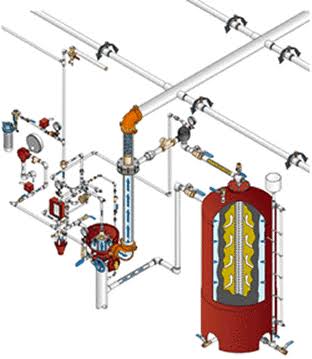
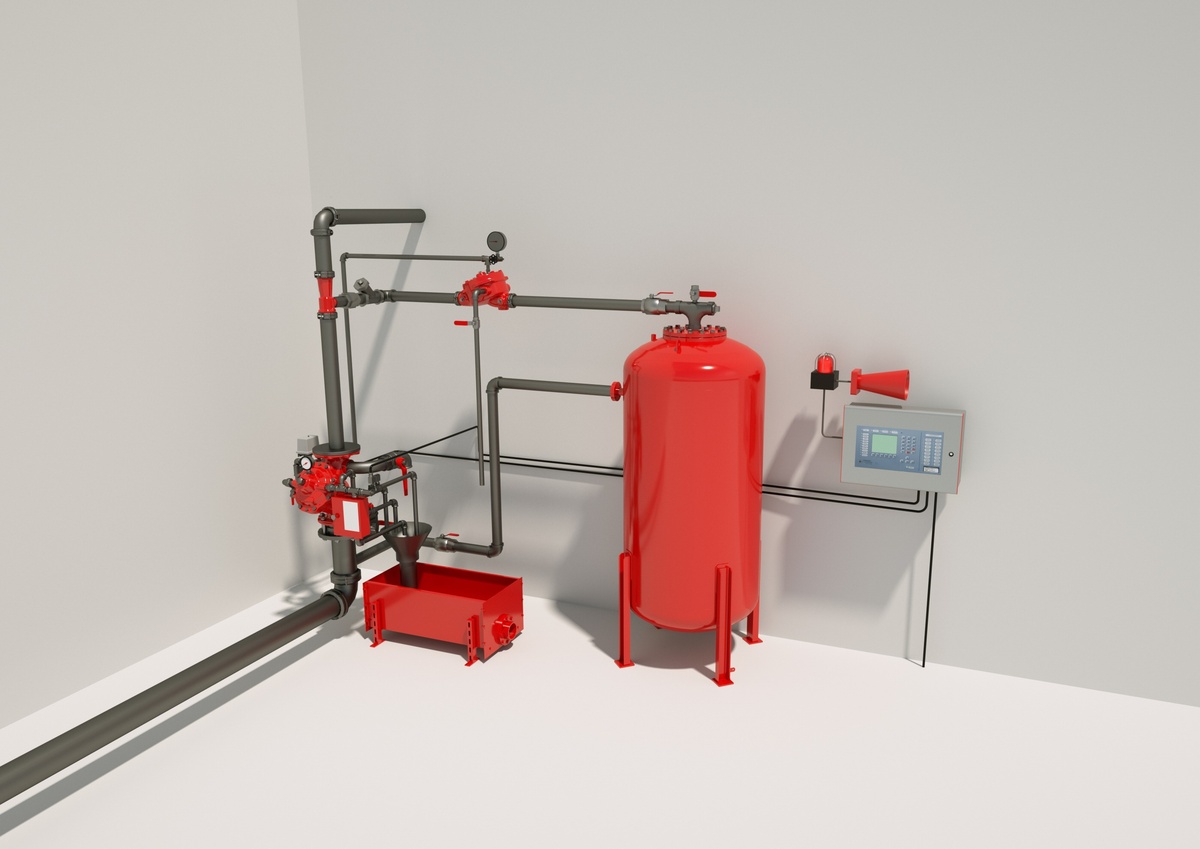
The following represents operation of a typical foam-water sprinkler system. Although many other types of systems are available, a basic foam system will always require foam agent storage, proportioning equipment, one or more discharge devices, and a manual and/or automatic means of detecting the fire and actuating the system.
- Fire breaks out in the rack storage area of a flammable liquid warehouse.
- Rising heat from the fire ruptures the quartzoid bulb(s) in the sprinkler head(s) which starts the flow of water.
- Flowing water opens the alarm check valve which allows water to open the hydraulic foam concentrate valve and operate the water-motor gong.
- Foam concentrate flows from the bladder tank into the proportioner where it is mixed with the flowing water at the designed foam solution percentage.
- Foam is generated as the foam solution discharges through the sprinkler head(s) onto the fire.
Project Gallery