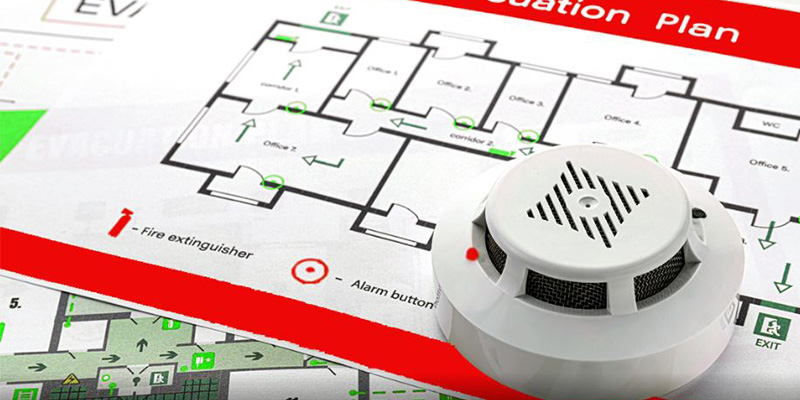
Evacuation Plans
Emergency preparedness
WHO WE ARE
ESTABLISHED
1979
Fire protection engineers with decades of trusted experience.
SAQCC
CERTIFIED
Qualified technical staff on every installation and service call.
COUNTRY
WIDE
Nationwide projects and installations across South Africa.
FULLY
EQUIPPED
Central Durban base with a complete workshop and support team.
TRUSTED
EXPERIENCE
Major banks, hospitals, retail and government clients.
Evacuation Plans
All-hazards emergency evacuation planning, signage and compliance for buildings and facilities.
Overview
Emergency evacuation is the immediate and rapid movement of people away from the threat or actual occurrence of a hazard. Examples range from the small scale evacuation of a building due to a bomb threat or fire to the large scale evacuation of a district because of a flood, bombardment or approaching hurricane. In situations involving hazardous materials or possible contamination, evacuees may be decontaminated prior to being transported out of the contaminated area.
Reasons for Evacuation
Evacuations may be carried out before, during or after natural disasters such as:
- Eruptions of volcanoes
- Cyclones
- Floods
- Hurricanes
- Earthquakes
- Tsunamis
Other reasons include:
- Military attacks
- Industrial accidents
- Nuclear accident
- Traffic accidents, including train or aviation accidents
- Fire
- Bombings
- Terrorist attacks
- Military battles
- Structural failure
- Viral outbreak
Planning
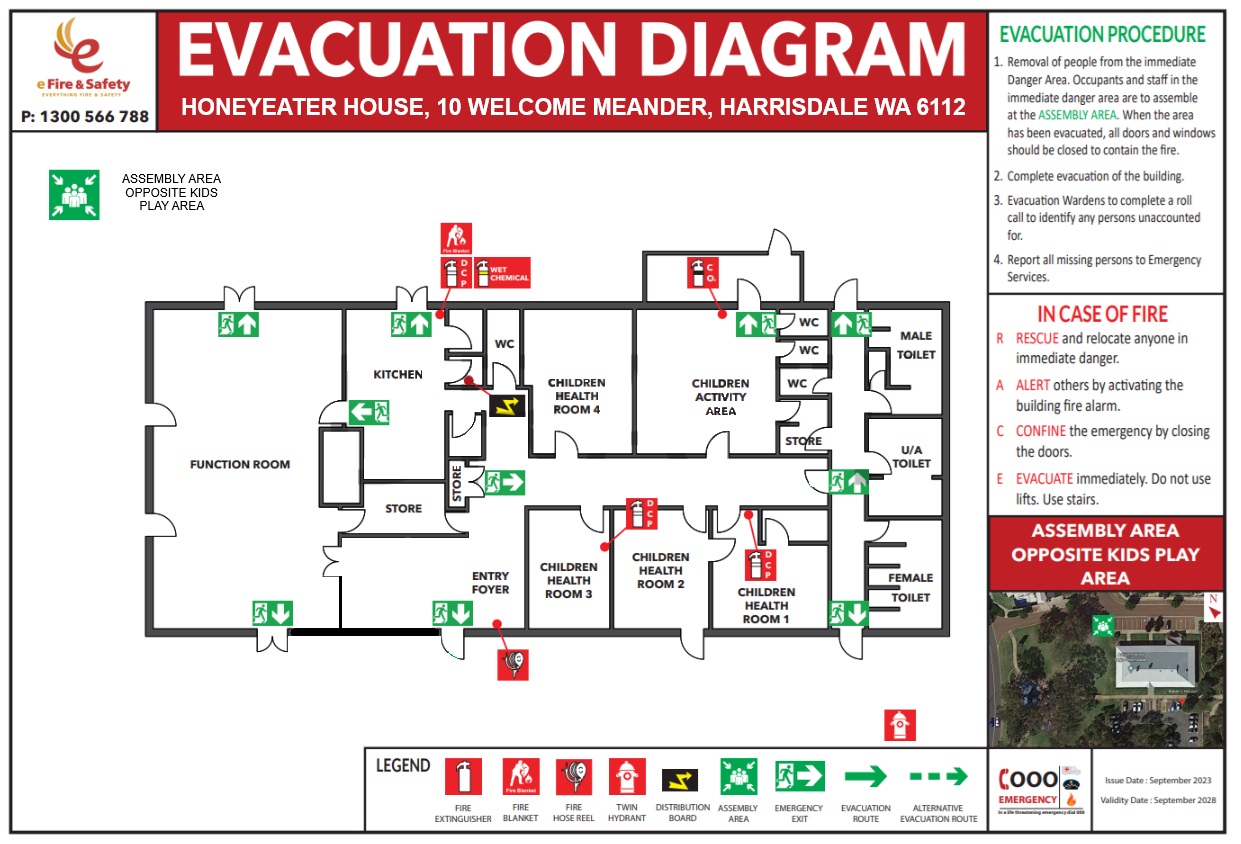
Emergency evacuation plans are developed to ensure the safest and most efficient evacuation time of all expected residents of a structure, city, or region. A benchmark "evacuation time" for different hazards and conditions is established. These benchmarks can be established through using best practices, regulations, or using simulations, such as modeling the flow of people in a building, to determine the benchmark. Proper planning will use multiple exits and technologies to ensure full and complete evacuation. Consideration for personal situations which may affect an individual's ability to evacuate. These may include alarm signals that use both aural and visual alerts. Regulations such as building codes can be used to reduce the possibility of panic by allowing individuals to process the need to self-evacuate without causing alarm. Proper planning will implement an all-hazards approach so that plans can be reused for multiple hazards that could exist.
Evacuation Sequence
The sequence of an evacuation can be divided into the following phases:
- Detection
- Decision
- Alarm
- Reaction
- Movement to an area of refuge or an assembly station
- Transportation
The time for the first four phases is usually called pre-movement time. The particular phases are different for different objects, e.g., for ships a distinction between assembly and embarkation (to boats or rafts) is made. These are separate from each other. The decision whether to enter the boats or rafts is thus usually made after assembly is completed.
Project Gallery