Fire Alarms
Detection & notification
WHO WE ARE
ESTABLISHED
1979
Fire protection engineers with decades of trusted experience.
SAQCC
CERTIFIED
Qualified technical staff on every installation and service call.
COUNTRY
WIDE
Nationwide projects and installations across South Africa.
FULLY
EQUIPPED
Central Durban base with a complete workshop and support team.
TRUSTED
EXPERIENCE
Major banks, hospitals, retail and government clients.
Fire Alarms
Automatic and manual fire alarm systems — design, installation and commissioning country wide.
Overview
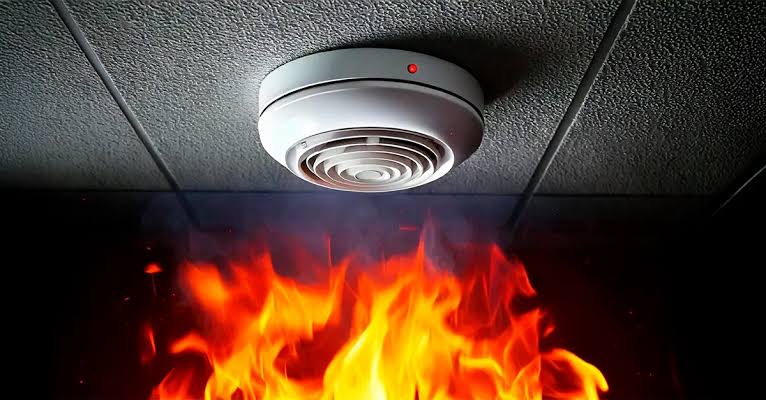
An automatic fire alarm system is designed to detect the unwanted presence of fire by monitoring environmental changes associated with combustion. In general, a fire alarm system is either classified as automatically actuated, manually actuated, or both. Automatic fire alarm systems can be used to notify people to evacuate in the event of a fire or other emergency, to summon emergency services, and to prepare the structure and associated systems to control the spread of fire and smoke.
Design
After the fire protection goals are established — usually by referencing the minimum levels of protection mandated by the appropriate model building code, insurance agencies, and other authorities — the fire alarm designer undertakes to detail specific components, arrangements, and interfaces necessary to accomplish these goals. Equipment specifically manufactured for these purposes are selected and standardized installation methods are anticipated during the design. In the United States, NFPA 72, The National Fire Alarm Code is an established and widely used installation standard.
Fundamental Configuration
Fire Alarm Control Panel
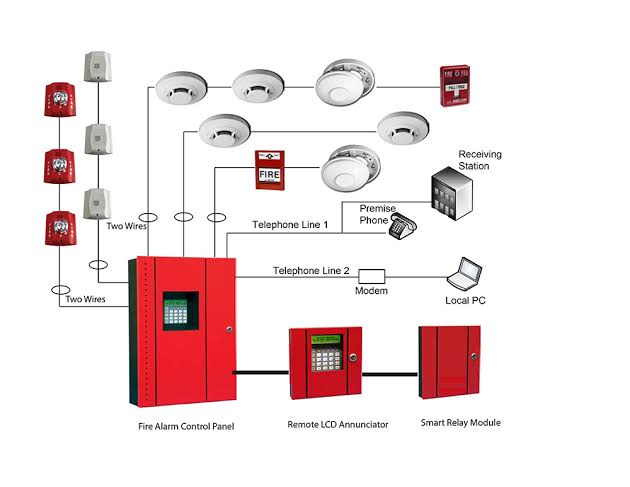
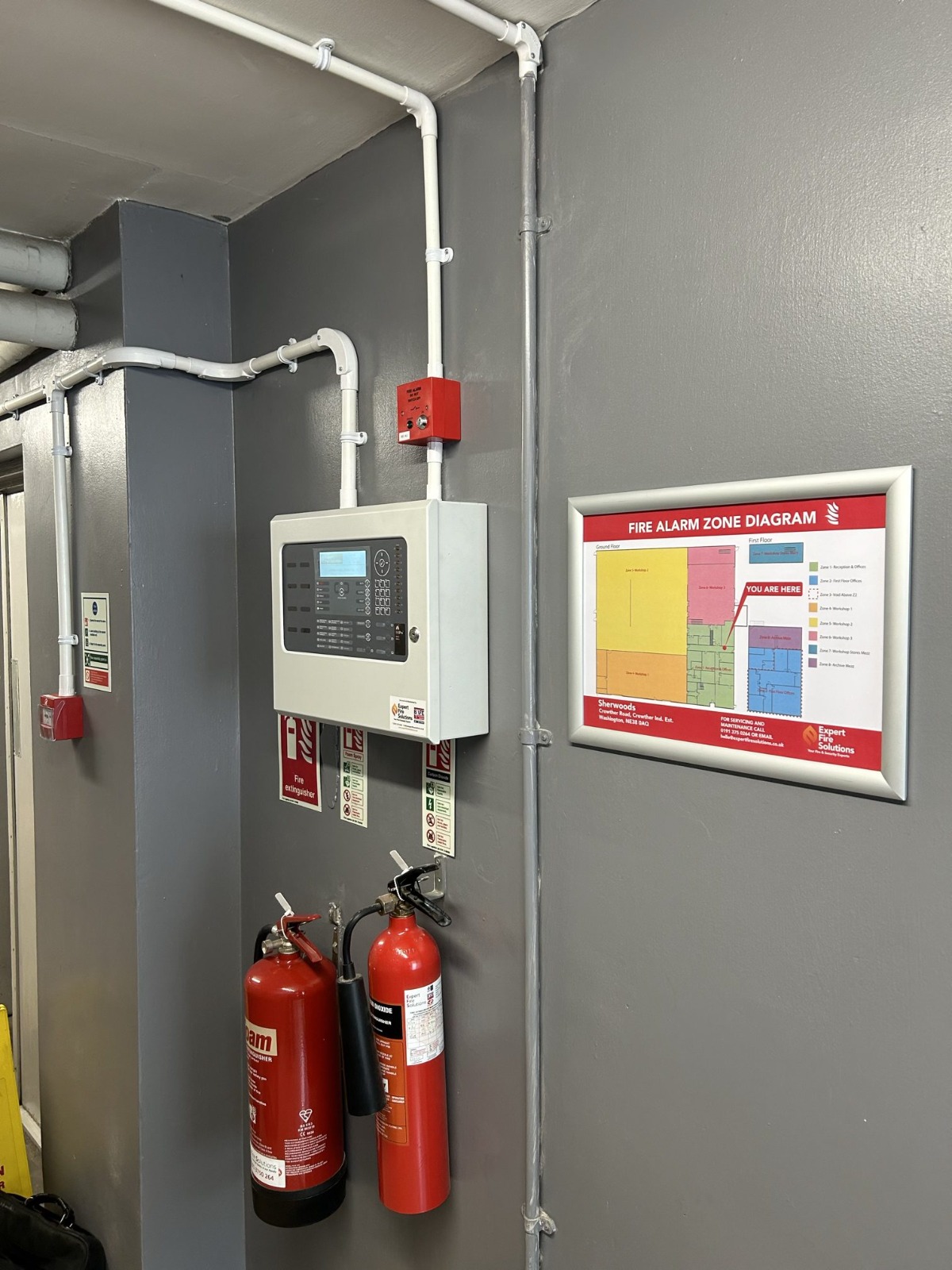
This component, the hub of the system, monitors inputs and system integrity, controls outputs and relays information.
Primary Power Supply
Commonly the non-switched 120 or 240 Volt Alternating Current source supplied from a commercial power utility. In non-residential applications, a branch circuit is dedicated to the fire alarm system and its constituents. "Dedicated branch circuits" should not be confused with "Individual branch circuits" which supply energy to a single appliance.
Secondary (Backup) Power Supplies
This component, commonly consisting of sealed lead-acid storage batteries or other emergency sources including generators, is used to supply energy in the event of a primary power failure.
Initiating Devices
This component acts as an input to the fire alarm control unit and are either manually or automatically actuated.
Notification Appliances
This component uses energy supplied from the fire alarm system or other stored energy source, to inform the proximate persons of the need to take action, usually to evacuate.
Building Safety Interfaces
This interface allows the fire alarm system to control aspects of the built environment and to prepare the building for fire and to control the spread of smoke fumes and fire by influencing air movement, lighting, process control, human transport and exit.
Initiating Devices
Manually actuated devices; break glass stations, buttons and manual pull stations are constructed to be readily located (near the exits), identified, and operated. Automatically actuated devices can take many forms intended to respond to any number of detectable physical changes associated with fire: convected thermal energy; heat detector, products of combustion; smoke detector, radiant energy; flame detector, combustion gasses; carbon monoxide detector and release of extinguishing agents; water-flow detector. The newest innovations can use cameras and computer algorithms to analyze the visible effects of fire and movement in applications inappropriate for or hostile to other detection methods.
Notification Devices
Audible, visible, tactile, textual or even olfactory stimuli (odorizer) to alert the occupants. Audible or visible signals are the most common and may utilize speakers to deliver live or pre-recorded instructions to the occupants. In the United States, fire alarm evacuation signals are required to use a standardized interrupted four count temporal pattern to avoid confusion with other signals using similar sounding appliances.
Other Methods
Audible textual appliances, which are employed as part of a fire alarm system that includes Emergency Voice Alarm Communications (EVAC) capabilities. High reliability speakers are used to notify the occupants of the need for action in connection with a fire or other emergency. These speakers are employed in large facilities where general undirected evacuation is considered impracticable or undesirable. The signals from the speakers are used to direct the occupant's response. The system may be controlled from one or more locations within the building known as Fire Wardens Stations, or from a single location designated as the building Fire Command Center.
Speakers are automatically actuated by the fire alarm system in a fire event, and following a pre-alert tone, selected groups of speakers may transmit one or more prerecorded messages directing the occupants to safety. These messages may be repeated in one or more languages. Trained personnel activating and speaking into a dedicated microphone can suppress the replay of automated messages in order to initiate or relay real time voice instructions.
Project Gallery